Bringing together researchers and practitioners from interactive systems engineering, HCI, AI/ML, and security/privacy to shape the future of user-sovereign, negotiable personalization.
The workshop challenges current practice of user modelling and profiling in AI and ML-driven services, where sovereignty over user profiles resides with service providers. We focus on the concept of user-sovereign personalization, where individuals can make their digital self-representations editable, inspectable, and selectively shareable across platforms. This topic is especially timely and critical because current AI-driven services often force users into a frustrating trade-off between privacy and platform lock-in, where they must remain loyal to a specific platform to benefit from an accurate user model. Furthermore, the need to resolve this tension is sharpened by emerging regulatory requirements surrounding transparency and user oversight, such as the GDPR and the EU AI Act. To tackle these challenges, the workshop invites position papers spanning multiple computer science and interdisciplinary domains, including human-computer interaction (HCI), distributed systems, artificial intelligence and machine learning, interactive systems engineering, and security and privacy. Specific themes for these contributions encompass developing schemas and modular representations for user profiles, designing interaction techniques for inspecting or editing user models, creating negotiation workflows and consent mechanisms, engineering user-side AI architectures like federated learning, ensuring verifiability and accountability, and establishing empirical methods to measure user agency and predictability.
Profiles as scoped, composable objects with explicit lifetimes, provenance, and revocation semantics — "at work", "commuting", "anonymous browsing".
Private, secure data spaces with interfaces that let users inspect what the system "believes", try changes via what-if previews, and apply edits with predictable effects.
External services can request, negotiate, and verify only the necessary facets of a profile, enabling portability without raw-data over-collection.
The following contributions have been accepted for presentation at ECPAI 2026. Papers will be made available here after the camera-ready deadline.
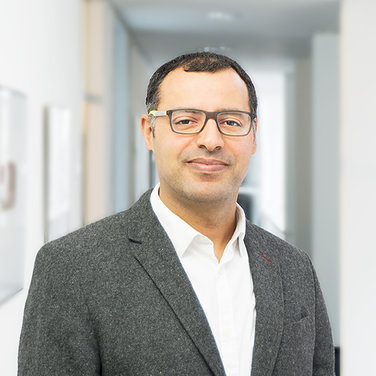
Lawyer and Executive Director at Homo Digitalis, PhD Candidate at the ICSD Department, School of Engineering, University of Aegean.
EU law represents one of the most ambitious efforts to protect fundamental rights in the digital age. Yet the effectiveness of legal frameworks depends not only on the rights and obligations they establish, but also on how these rules are interpreted, implemented, and enforced in practice. At a time when regulation is increasingly portrayed as a barrier to innovation and competitiveness, this talk will explore whether the real challenge lies in persistent enforcement gaps, regulatory fragmentation, and legal uncertainty. Drawing on examples from the GDPR, the AI Act, and the recent Digital Omnibus reform packages, we will discuss the challenges of ensuring effective enforcement and interpretation of EU digital rights.
Moderated Q&A on digital rights, AI governance, and user sovereignty.

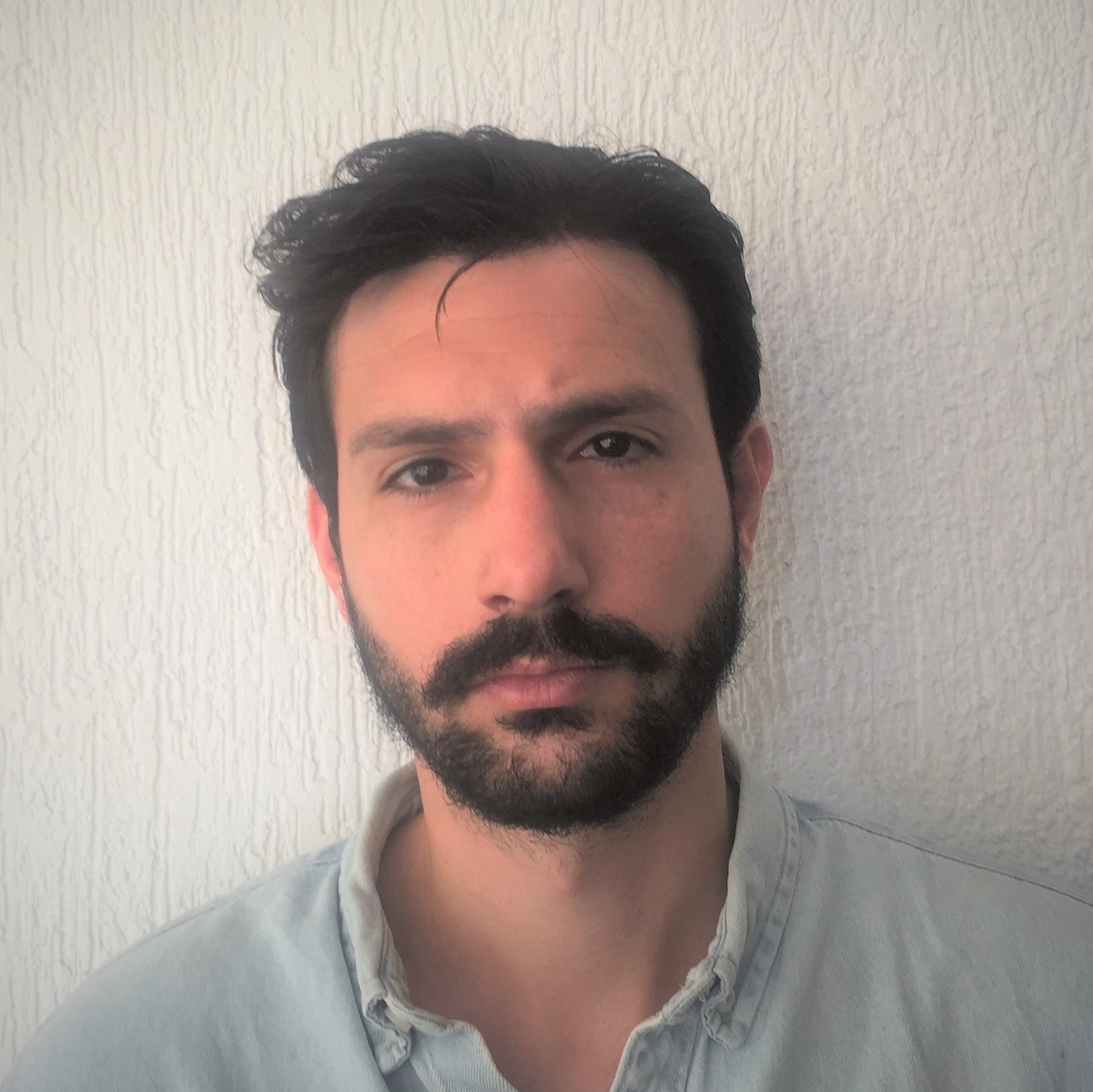
Thomas Meier is an independent writer and political philosopher of science and technology. Dr. Meier teaches and lectures on the ethics of technology at universities in Germany, the UK, and Mexico, among them LMU Munich, the University of Cambridge, and Universidad Iberoamericana.
Mainstream AI ethics has become a largely technocratic enterprise: a matter of bias metrics, alignment specifications, and procedural checklists administered by experts. This talk argues for a different focus. Drawing on existentialist and communitarian thought, it contends that the toughest questions raised by AI are not analytical but human—concerning meaning, freedom, responsibility, and the kinds of communities we wish to inhabit. Rather than asking only how to optimize systems, we should ask what they do to our shared forms of life. Ethics here is not a compliance layer, but a way of taking our humanity seriously.
Moderated Q&A on digital rights, AI governance, and user sovereignty.

Professor of Philosophy of Information and Digital Humanities at the Ionian University. His work centres on digital humanism and the philosophy of artificial intelligence and human enhancement, at the intersection of technology, politics, and ethics.
Moderated Q&A on digital rights, AI governance, and user sovereignty.

A full-day workshop combining paper discussion with collaborative engineering activities.
| Time | Activity |
|---|---|
| 10:00 – 10:30 | Welcome and introductions |
| 10:30 – 11:00 |
Technical presentations (1–2)
|
| 11:00 – 11:30 | ☕ Coffee break |
| 11:30 – 12:15 |
Technical presentations (3–5)
|
| 12:15 – 13:00 |
Position Impulse — Thomas Meier (LMU Munich) Philosophy of technology, power, and the moral commons of AI |
| 13:00 – 14:00 | 🍽️ Lunch break |
| 14:00 – 14:45 |
Keynote — Eleftherios Chelioudakis (Homo Digitalis / University of Aegean) Between Legal Promise and Practical Reality: Enforcement and Interpretation Challenges in the GDPR and AI Act |
| 14:45 – 15:30 |
Panel — Q&A with Eleftherios Chelioudakis, Thomas Meier & Theofanis Tasis Moderated discussion on digital rights, AI governance, and user sovereignty |
| 15:30 – 16:00 | ☕ Coffee break |
| 16:00 – 17:00 | Group activity |
| 17:00 – 17:30 | Group presentations and final discussion |
Assistant Professor for Mobile HCI; works on mobile/XR interaction and human–AI collaboration.
Assistant Professor in HCI; researches interaction techniques and prototyping for XR and context-aware systems.
Professor of Human-Centered AI; expertise in user modelling, recommender systems, and scalable personalization.
Researcher with expertise in end-user development and interactive system engineering.
Researcher at the intersection of HCI and AI, focusing on explainable AI and value-driven design.
Associate Professor of Moral Philosophy and Neuroethics; researches AI ethics and neurorights.
Assistant Professor focusing on mobile and pervasive interactive systems, context-aware services and IoT.
Professor; expertise in cybersecurity, cryptography, hardware security, and embedded systems.